
 Call Us
 Whatsapp
Category: Uncategorized
Blog Details

Based On
Sydney, NSW
500+
Projects
Served Proudly.
02
Jan’2026Steel Cut to Size: Precision Solutions for Every Project
S teel fabrication is the backbone of modern construction and industrial development, shaping everything from skyscrapers and bridges to warehouses, mining platforms, and residential structures. The process involves transforming raw steel into customised components through cutting, bending, welding, machining, and assembly. These techniques demand precision, skilled workmanship, and strict adherence to engineering standards to ensure that every structure is strong, durable, and safe.
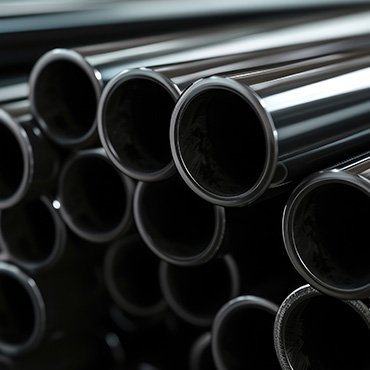
The first step in steel fabrication is cutting, where raw sections such as beams, plates, and pipes are shaped into exact dimensions required for a project. Fabricators use several cutting methods depending on the thickness and complexity of the material. Plasma cutting is commonly chosen for heavy plates and intricate shapes, while laser cutting provides exceptional accuracy with minimal heat distortion, making it ideal for thinner materials and detailed patterns. Traditional oxy-fuel cutting remains effective for very thick steel sections, whereas mechanical methods like sawing, drilling, and shearing are used for straight cuts and repetitive tasks.
Once the steel is cut, bending and forming techniques give the material its required shape without compromising strength. Press brake bending is widely used to create precise folds for frames, brackets, and stair components. Roll bending gradually curves steel sections and is essential for circular frames and arched designs, while tube bending produces smooth, uniform curves in hollow sections used for railings, architectural features, and automotive applications.
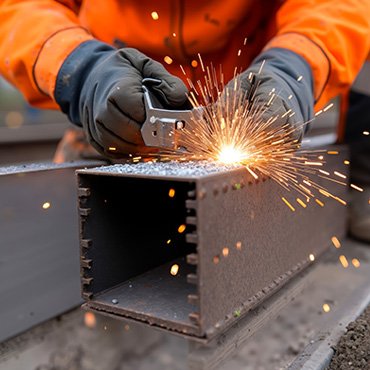
Welding is one of the most critical stages of fabrication, as it joins steel components into solid, unified structures. MIG welding is preferred for its speed and efficiency in commercial and structural applications, whereas TIG welding produces clean, highly accurate welds suitable for thin materials and stainless steel. Stick welding is valued for its versatility and reliability, especially in outdoor or on-site environments, and flux-cored welding provides deep penetration and high productivity for industrial and heavy-duty structures.
Machining adds another layer of precision to the fabrication process. Using techniques such as CNC milling, turning, drilling, tapping, and grinding, fabricators refine steel components to exact specifications. This ensures that every part aligns correctly during assembly and that the final structure meets strict engineering requirements. After machining, the steel components move to the assembly stage, where they are carefully aligned, tack-welded, and fitted with bolts, brackets, and stiffeners. This stage demands careful measurement, structural understanding, and a commitment to accuracy.
Finishing enhances both durability and appearance. Steel is treated with methods such as galvanising, powder coating, sandblasting, or industrial painting to protect it from corrosion and extend its lifespan. These treatments are especially important for structures exposed to harsh environmental conditions, such as bridges, mining equipment, and coastal buildings.
Quality control runs through every step of the fabrication process. Inspectors evaluate dimensional accuracy, weld strength, and overall structural integrity. Advanced techniques like ultrasonic or X-ray testing may be used for critical components, ensuring they meet safety standards and project specifications. Material certifications and documentation also help maintain transparency and accountability throughout the fabrication workflow.
Steel fabrication plays a vital role across various sectors, from infrastructure and industrial facilities to commercial buildings, residential projects, mining operations, and defence structures. As technology continues to advance, modern fabrication incorporates automation, robotics, and enhanced engineering tools, allowing for greater efficiency, higher precision, and improved safety. Despite these innovations, the core purpose remains unchanged: to create strong, reliable, and long-lasting steel structures that support the demands of modern construction.
In conclusion, steel fabrication is a blend of technical expertise, innovative technology, and meticulous craftsmanship. Understanding the key techniques helps engineers, builders, and students make informed decisions, streamline project planning, and achieve stronger, safer, and more efficient structural outcomes. As the industry evolves, mastering these fabrication methods becomes essential for anyone involved in construction or industrial engineering.
Jan 02, 2026
Cutting & Welding Processes in Metal Fabrication
Blog Details
Based On
Sydney, NSW
500+
Projects
Served Proudly.
02
Jan’2026What Is Steel Fabrication and Why It Matters for Modern Construction
Steel fabrication is the process of cutting, shaping, and assembling steel to create structures and components used in construction, manufacturing, and infrastructure projects. From residential buildings to large industrial plants, steel fabrication plays a critical role in delivering strength, durability, and precision.
Modern steel fabrication uses advanced machinery such as CNC cutting, laser cutting, and robotic welding to ensure accuracy and consistency. These technologies allow fabricators to meet tight tolerances and complex design requirements while reducing material waste.
One of the biggest advantages of steel fabrication is customization. Fabricated steel can be tailored to exact specifications, making it ideal for projects that demand unique designs or non-standard dimensions. This flexibility helps architects and engineers bring innovative ideas to life.
By choosing a professional steel fabrication partner, businesses and builders benefit from faster project timelines, improved structural integrity, and cost-effective solutions that last for decades.
Jan 02, 2026
Cutting & Welding Processes in Metal Fabrication
Blog Details
Based On
Sydney, NSW
500+
Projects
Served Proudly.
02
Jan’2026Cutting & Welding Processes in Metal Fabrication
Cutting & Welding Processes in Metal Fabrication
Blog Details
Based On
Sydney, NSW
500+
Projects
Served Proudly.
02
Jan’2026Steel Fabrication Techniques: An In Depth Practical Guide.
Test Description